Italian meatball appetizer refers to bite-size, sauced meatballs served before the main course. They’re seasoned, portioned small, and paired with dips or skewers for sharing. At Bellissimo Pizza & Pasta at 13905 127 St in Edmonton, we prep party-friendly meatballs with classic Italian technique—so you can make them at home or order hot trays for pickup.
By Bellissimo Pizza & Pasta • Last updated: 2026-06-22
At a Glance: Italian Meatball Appetizers
Italian meatball appetizers are small, seasoned meatballs served with sauces like marinara or pesto. They batch easily, reheat well, and pair with bread or salad. For events, plan 2–4 pieces per person as a starter and hold hot meatballs between 140–165°F for safe, tender service throughout your gathering.
Planning a party spread? This overview explains what an appetizer-size meatball is, why guests love it, and how to serve fast. You’ll also get local tips for hosting in Baranow and Edmonton and examples from our kitchen so you can recreate restaurant-level results—then segue seamlessly to pizza, pasta, and salads.
- Clear definition, portion sizing (1–1.25 inches), and service temperatures
- Cooking methods: bake, pan-sear, or simmer; finish in sauce for tenderness
- Sauce pairings beyond marinara: pesto, creamy parmesan, arrabbiata, lemon-parmesan
- Make-ahead, freezing, and gentle reheating strategies for home hosts
- Real examples from Bellissimo’s appetizer playbook in North Edmonton
Want a broader view of Italian flavors? Explore our Italian food & drink overview for pairing inspiration that bridges appetizers, mains, and beverages.
What Is an Italian Meatball Appetizer?
An Italian meatball appetizer is a cocktail-size polpette made with ground meat, aromatics, herbs, cheese, and a binder, served before the main course. Portion meatballs to about 1–1.25 inches, skewer or sauce for easy sharing, and finish in a flavorful sauce so every two-bite piece feels tender and satisfying.
In classic Italian cooking, polpette vary by region, but the appetizer format focuses on small size, rich seasoning, and sauce that clings. The target is contrast: a lightly crisp exterior and a soft, juicy center that doesn’t weigh guests down before pizza or pasta. Consistency matters—uniform size cooks evenly and looks sharp on a platter.
- Core components: ground beef/pork blend, panade (breadcrumbs + milk), parmesan, parsley, garlic, egg
- Flavor amplifiers: onion, black pepper, chili flake, lemon zest, or oregano
- Textural keys: gentle mixing to avoid toughness; brief chill to help shape retention
In our Edmonton kitchen, we roll compact 18–25 g portions, set structure with a quick bake or sear, then finish in sauce. This sequence infuses flavor and allows steady holding above 140°F without drying—ideal for casual entertaining or restaurant service.
Why These Appetizers Matter in Edmonton
Italian meatball appetizers fit Baranow and greater Edmonton gatherings because they’re warm, shareable, and easy to scale. Small portions suit mixed-age groups, sauces adapt to preferences, and trays travel well for pickup. Properly held, they stay juicy for hours during local get-togethers.
Our neighborhood in Baranow favors plates that invite sharing—family birthdays, team celebrations, and relaxed nights with friends. Meatballs check every box: friendly for kids, flavorful for adults, and flexible with heat levels and herbs. They’re also resilient. When cooked to 160–165°F and finished in sauce, the texture stays plush for service windows of 60–120 minutes.
- Transport: Covered, sauced meatballs maintain moisture on short rides across North Edmonton.
- Portioning: Expect 20–24 one-inch meatballs per pound of raw mix; plan 2–4 per guest as a starter.
- Versatility: Offer two sauces—one mild (marinara) and one vibrant (pesto-cream or arrabbiata).
At-home entertaining continues to rise; trend roundups highlight more snackable, shareable formats for small groups—see this look at at-home cooking trends for context. Meatballs slot in perfectly because they scale from a 6–8 person hangout to larger events with minimal extra effort.
How Italian Meatball Appetizers Work (From Mix to Serve)
Start with a balanced mix (meat, aromatics, dairy, binder), mix gently, and size consistently. Set structure with a bake or sear, then finish meatballs in sauce to rehydrate. Hold above 140°F and serve with skewers or small forks. This flow preserves tenderness and timing.
Here’s a kitchen-tested framework you can follow at home. It mirrors our professional process but uses tools you likely already own. Each step protects moisture and flavor so the final two bites taste like the first.
- Build the panade: Soak breadcrumbs in milk 5–10 minutes, then fold in grated parmesan and egg. Hydrated starches retain juices under heat.
- Season the base: Add minced garlic, onion, parsley, salt, pepper, and a pinch of chili flake. Even seasoning equals even flavor.
- Choose the meats: A 50/50 beef-pork blend is classic. Poultry blends (chicken/turkey) are lean—aim for 165°F internal for food safety.
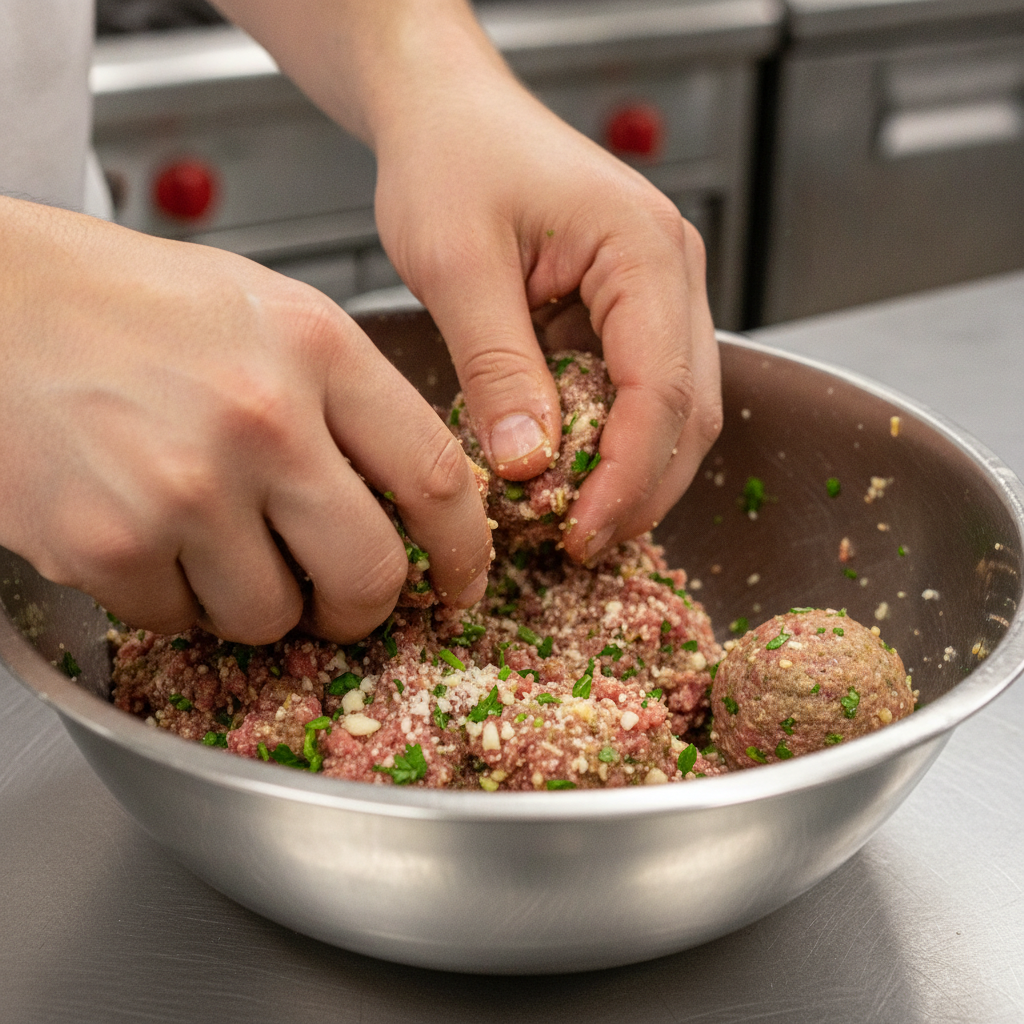
- Mix gently: Combine with fingertips until just cohesive. Overmixing compacts proteins and toughens texture.
- Portion evenly: Use a #60 scoop or weigh 18–25 g (about 1–1.25 inches). Uniformity improves cooking accuracy.
- Set structure: Bake at moderate heat or pan-sear 2–4 minutes per side for color. Don’t fully cook dry—save that for the sauce step.
- Finish in sauce: Simmer 10–20 minutes in marinara, pesto-cream, or arrabbiata to infuse and glaze.
- Serve hot: Hold trays 140–165°F. Replenish platters every 15–20 minutes for just-made freshness.
Pro tip: Brown half the batch more deeply for those who love a robust crust, and keep the other half lighter for ultra-tender bites. Mixed textures make your platter feel abundant and intentional.
Types, Methods, and Flavor Approaches
Match method to crowd: bake for hands-off batches, pan-sear for deep browning, or simmer for ultra-tender texture. Pair with marinara, basil pesto, creamy parmesan, or spicy arrabbiata, then garnish with basil, pecorino, or lemon zest for brightness.
Flavor is a dial, not a switch. You can create distinct profiles by swapping sauces, herbs, and finishes—without changing the base technique. These combinations work for dine-in starters and at-home platters alike.
Classic profiles
- Marinara + basil: Tomato sweetness and acidity with a clean herbal finish.
- Pesto-cream: Basil pesto whisked into warm cream or mascarpone—silky, aromatic, irresistible.
- Arrabbiata heat: Chili-forward sauce with garlic and tomato; finish with parsley and olive oil.
- Lemon-parmesan glaze: Light pan sauce with stock, lemon zest, and grated cheese for a savory sheen.
Method trade-offs
| Method | Texture | Best For | Pros | Considerations |
|---|---|---|---|---|
| Baked | Even, lightly browned | Large batches | Hands-off, consistent doneness | Finish in sauce to avoid drying |
| Pan-seared | Deep crust, caramel notes | Smaller groups | Big flavor, great color | Active time; splatter management |
| Simmered | Ultra-tender, sauce-infused | Comfort-forward menus | Moist from edge to center | Less exterior browning |
Garnishes and finishing touches
- Fresh herbs: Basil, parsley, oregano brighten rich sauces.
- Cheeses: Parmesan or pecorino add salty depth; marinate bocconcini on the side.
- Crunch: Toasted breadcrumbs or pine nuts provide texture contrast.
- Acid: Lemon zest or a splash of vinegar balances richness.
Craving green-herb energy? Browse our quick pesto appetizer ideas to bring basil brightness to your snack table.
Best Practices for Perfect Party Meatballs
Protect tenderness with a soaked breadcrumb panade, mix gently, size evenly, and finish in sauce. Cook beef/pork blends to 160°F and poultry blends to 165°F. Hold trays above 140°F and refresh platters every 15–20 minutes to keep each bite tasting freshly made.
We coach our team to respect the meat’s structure at every step. Small process choices—how you mix, how long you chill, how you transfer to sauce—add up to a platter that disappears in minutes.
- Use a panade: Hydrated starches trap juices; 5–10 minutes of soaking pays off.
- Chill briefly: 10–15 minutes helps shape retention and cleaner browning.
- Brown, then braise: Set color and finish in sauce for moisture.
- Target doneness: 160°F (beef/pork), 165°F (poultry). Verify with an instant-read thermometer.
- Service flow: Warm platters + appetizer picks. Replenish in small waves.
- Leftovers: Cool quickly, refrigerate within two hours, and reheat to steaming-hot.
Troubleshooting: texture, flavor, and appearance
- Dry texture: Increase panade ratio by 10–15%, or finish longer in sauce.
- Tough bite: Mix less; handle with fingertips; reduce compacting pressure when scooping.
- Bland flavor: Season the panade itself; add grated parmesan and salt early for carry-through.
- Pale color: Pat portions dry before searing; don’t crowd the pan; preheat properly.
- Broken balls: Chill before cooking; use a small scoop for consistency; avoid flipping too soon.
These micro-adjustments raise success rates dramatically, especially when preparing 40–80 pieces for a typical family event or club meeting.
Tools and Resources
You don’t need specialty gear. A mixing bowl, sheet pan, scoop, skillet, and instant-read thermometer do the job. For events, chafers or slow cookers hold meatballs safely. Small skewers, plates, and napkins streamline guest flow and keep the table tidy.
Our restaurant kit is robust, but home cooks can do a lot with very little. Prioritize batch size, temperature, and presentation. The right platter and garnish elevate even the simplest recipe.
- Essentials: Mixing bowls, half-sheet pans, parchment, cooling rack, skillet, tongs.
- Nice-to-have: #60 scoop, Dutch oven for braising, chafing dish for service.
- Presentation: Appetizer picks, shallow bowls for sauces, fresh herbs for color contrast.
- Thermometry: Keep a reliable instant-read for 160–165°F checks, plus a probe to monitor holding temps.
Short on time? Swing by Bellissimo for hot trays and round out your spread with salads, garlic bread, and mains. Browse our menu to plan a balanced lineup everyone will enjoy.
Pairings and Menu Planning
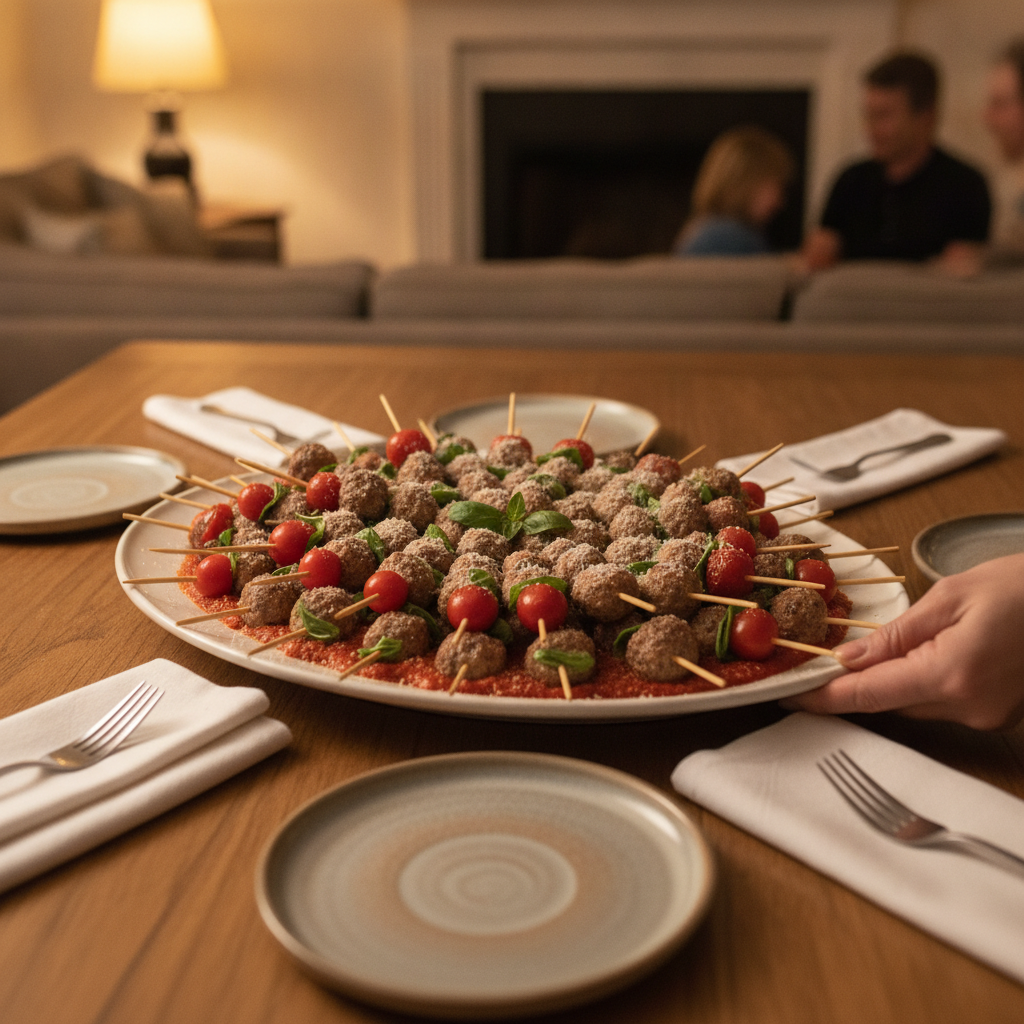
Balance rich meatballs with crisp salads, light pastas, and refreshing drinks. Offer two sauces, add bread for dipping, and finish with citrusy greens. Align flavors so appetizers lead naturally into pizza or pasta, keeping guests satisfied but ready for the main meal.
Think progression. When appetizers crescendo into mains and beverages, the entire experience feels intentional. You don’t need dozens of dishes—just three or four that complement one another.
- Start bright: A simple salad or marinated vegetables prepare the palate.
- Two-sauce rule: Serve one classic (marinara) and one vibrant (pesto-cream or lemon-parmesan).
- Starch balance: Offer bread or polenta bites so guests can swipe plates clean.
- Main event: Transition to a favorite pizza or a light pasta to keep energy up.
- Drinks: Pair with Italian sodas, spritzes, or low-proof cocktails.
Need beverage ideas? Skim our Italian restaurant drinks guide for sips that make meatball spices pop without overwhelming the palate.
For a cuisine tour your guests will remember, glance at our Italian classics roundup and connect the dots between starters, mains, and sweets.
Make-Ahead, Freezing, and Reheating
Batch smart: roll a day ahead, par-bake to set, then finish in sauce before serving. Freeze raw or par-baked meatballs for up to a few weeks, thaw overnight in the fridge, and reheat gently. Keep service temps above 140°F to preserve tenderness.
Make-ahead is your stress reducer. A little prep spreads work over two days and keeps day-of tasks light.
- Day -1 (45–60 minutes): Mix, portion, and chill. Par-bake if desired; cool and refrigerate.
- Day 0 (30–45 minutes): Warm sauce, finish par-baked portions until 160–165°F internal, and hold hot.
- Freezing: Arrange raw balls on a tray, freeze solid, pack airtight. Or freeze par-baked to speed service.
- Reheat path: Gently simmer in sauce 10–20 minutes; avoid boiling to protect texture.
- Quality window: Sauced meatballs hold texture for 60–120 minutes on a buffet when kept hot.
Label batches with times so you can rotate trays. This single habit maintains consistency when hosting a crowd.
Scaling and Logistics for Events
Scale by portions, not pounds: plan 2–4 appetizer meatballs per guest, or 6–8 for small-plates events. A pound of mix yields about 20–24 one-inch meatballs. Stagger trays, keep picks handy, and refresh every 15–20 minutes to maintain a just-made feel.
Logistics make or break service quality. A few numbers help you stay in control when the doorbell keeps ringing.
- Yield guide: 20–24 one-inch meatballs per pound; 60–72 per 3 pounds; 100+ for big trays.
- Portion planning: 2–4 per guest as a starter; 6–8 when meatballs anchor a small-plates menu.
- Service gear: One chafer or slow cooker per 50 pieces keeps temps stable.
- Traffic flow: Picks at both ends of the platter reduce bottlenecks by 20–30%.
- Refill cadence: Replenish in half-tray waves every 15–20 minutes for peak texture.
Building a mixed spread that includes vegetarian options, too? For additional inspiration on meat-free party platters, browse these ideas for vegetarian snacks and party planning. A balanced table satisfies more guests without increasing effort.
Case Studies and Examples From Bellissimo
Match method to setting: bake for office platters, braise for family dinners, and pan-sear for small, chef-y bites. Pair sauces to guests—mild marinara for kids, pesto-cream for herb lovers, arrabbiata for heat fans—and garnish generously with basil and parmesan.
Here are short, real-world scenarios based on how our Edmonton guests like to gather and eat.
- Office potluck (pickup): Portion 1-inch meatballs, bake to set, then pack in marinara. They reheat evenly, and sauce prevents dryness during a 15–25 minute drive.
- Birthday at home (dine-in feel): A Dutch oven simmer yields ultra-tender results. Finish with basil and parmesan; serve with toasted bread for dipping.
- Game-night sampler: Two sauces—marinara and pesto-cream—plus skewers. Guests choose their own flavor path and pace; see these gameday party tips for hosting flow ideas.
- Community club meeting: Par-bake, then finish on arrival. A gentle 10-minute simmer brings them to temp; refresh the platter twice an hour.
Each approach keeps texture, temperature, and timing aligned. That’s the difference between a platter that’s picked over and one that disappears in minutes—without leaving guests too full for pizza or pasta afterward.
Local considerations for Baranow
- Pickup traffic is smooth near Skyview Power Centre; plan a quick loading-zone stop and a second set of hands for larger trays.
- In colder months, pre-warm serving bowls and lids so meatballs retain heat during the short ride through Edmonton’s winter air.
- For park-adjacent gatherings near Cumberland Lake, pack insulated carriers and serve in short bursts to keep temps safe and texture tender.
Italian Meatball Appetizer FAQ
Cook appetizer meatballs to a safe internal temperature, portion 2–4 per guest, and hold trays between 140–165°F. Mix gently for tenderness and finish in sauce for moisture. For events, batch in waves so every tray tastes freshly made.
How small should appetizer meatballs be?
Aim for about 1 to 1.25 inches in diameter. Consistent sizing ensures even cooking, clean presentation, and predictable portions—usually two to four pieces per person when served alongside other starters.
Is it better to bake or fry meatballs for a party?
Bake for large batches and consistency; pan-sear for deeper browning and smaller groups. Many hosts bake to set the structure, then finish the meatballs in sauce to lock in moisture and flavor before serving.
What sauces pair best with Italian meatball appetizers?
Marinara is classic, pesto-cream adds herbal richness, and arrabbiata brings heat. Offer two sauces so guests can choose, and garnish with basil, parmesan, or lemon zest to brighten the plate.
Can I make meatballs ahead for events?
Yes. Roll and chill a day ahead, or par-bake and refrigerate. Reheat gently in sauce until hot in the center. You can also freeze; thaw in the fridge overnight and rewarm slowly to preserve tenderness.
What’s the safe internal temperature?
For ground beef or pork blends, cook to 160°F internal; for poultry blends, 165°F. Use an instant-read thermometer and hold prepared trays above 140°F during service to maintain quality.
Conclusion and Next Steps
Italian meatball appetizers shine when portions are small, doneness precise, and sauces flavorful. Choose a method that fits your crowd, hold hot for service, and refresh platters often. For a no-stress option, order hot trays and pair with salads, pizza, or pasta.
Dial in tenderness, temperature, and timing, and these little bites will be the first empty plate on the table. Keep skewers and napkins nearby, set out two sauces, and garnish like you mean it—your guests will notice.
Key takeaways
- Size evenly (1–1.25 inches), mix gently, and use a panade for tenderness.
- Finish in sauce and hold between 140–165°F for safe, juicy service.
- Plan 2–4 pieces per person; refresh trays every 15–20 minutes.
- Balance the menu with crisp salads, pizza, pasta, and refreshing drinks.
Ready to host without the scramble? Map your lineup on our menu, then pick up appetizers, mains, and drinks together for a smooth, delicious evening.
Related Articles
Level up your Italian appetizer game by exploring pesto-forward starters, smart beverage pairings, and classic mains that complement meatballs. These guides help you build a cohesive, crowd-pleasing menu from first bite to final toast.
For herb-bright starters, see our quick tour of pesto appetizers. When you’re planning beverages, our Italian drinks guide offers easy wins. And if you’re sketching the full meal, browse our Italian classics for mains that keep the party rolling. For more kitchen inspiration from our team, peek at our cooking notes. For broader results and updates, you can always check our blog.